ZYhub
RBAC project and delivery platform for Zytro’s internal team and client companies.
Project overview

Role
UX/UI designer

Timeline
Jan 2023 - Aug 2023
Team
1 designer, 2 developers, CEO
Tools
Figma, Jira
Role
UX/UI designer
Timeline
Jan 2023 - Aug 2023
Team
1 designer, 2 developers, CEO
Tools
Figma, Jira


Zytro is a 3D visualization company for architecture and real estate, based in London, helping teams present and sell spaces before they are even built.
ZYhub is part of the ecosystem. It's the management layer around:
The problem
Before ZYhub, the workflow was too fragmented.
Zytro teams and client teams had to manage many projects, many files, many participants, and many delivery moments at once. Feedback could happen in different places. Status could be unclear. File access depended too much on manual coordination.
One pain point was especially operational: time zones.
Zytro had teams in Brazil and clients in the UK. That meant files, emails, and project visibility often had to be released at the right time for the client. Without a structured system, that created unnecessary manual effort.
The product
ZYhub was an RBAC platform for collaboration between Zytro and its client companies.
It was not just a dashboard. It was the operating layer of the ecosystem.
From a product architecture perspective, the platform had two main sections: the client side and the staff side.
Client side
Users could belong to one or more companies, since some partners worked across multiple client accounts. After login, they first chose which company they wanted to access.
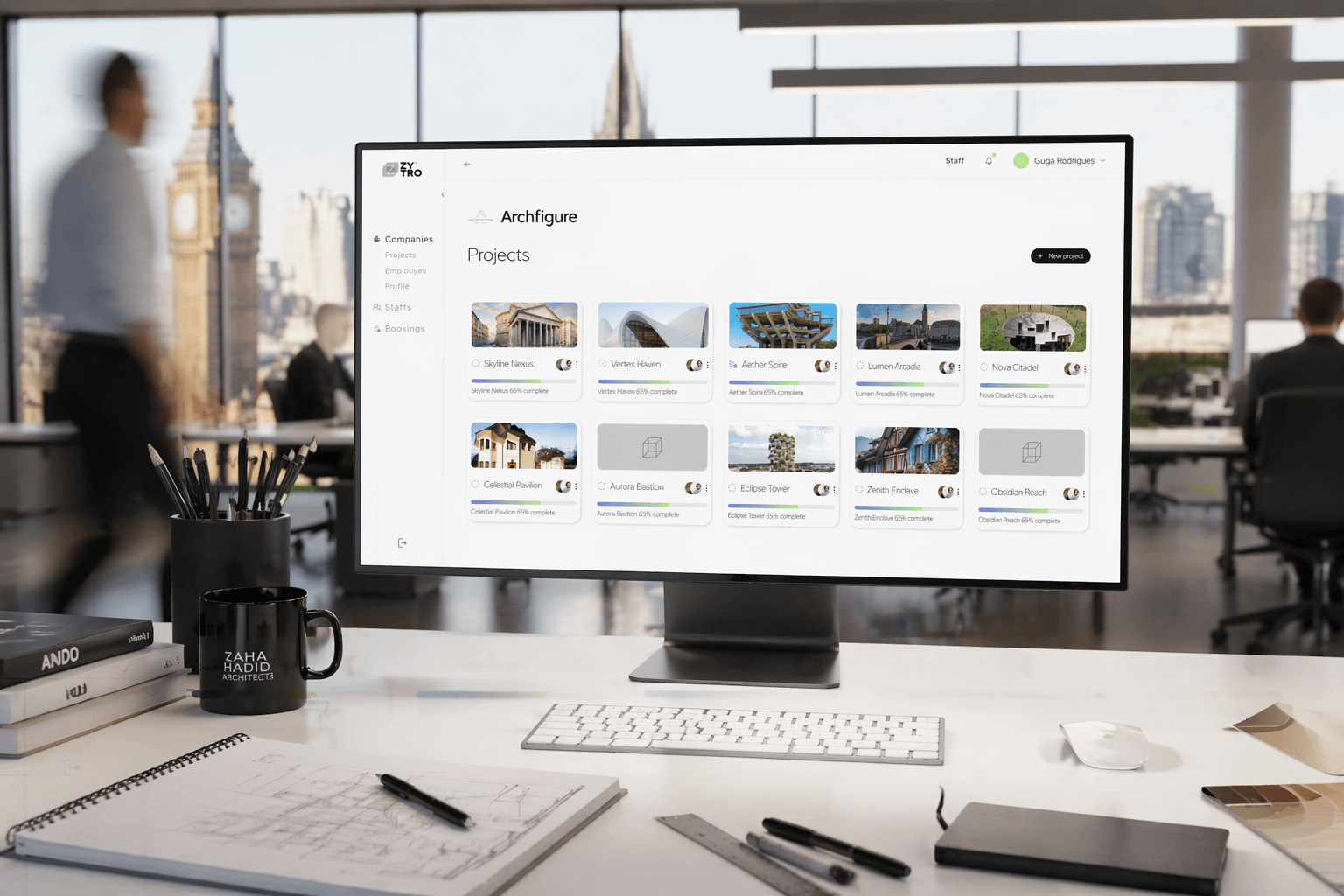
From there, ZYhub gave them a structured view of active and completed projects.
Project structure

Inside each project, the interface worked as a delivery and tracking space.
project description
participants
file and folder structure
current status of each item
file download
analytics
access to the associated ZYcreate board when visual review was needed
This mattered because the work was rarely about one image. Clients were often managing multiple deliverables, multiple collaborators, and different stages of progress at the same time.
Staff side
On the Zytro side, the platform had a broader management structure.
What each staff member could see or do depended on their permission level.
This is where RBAC became important. Not every user saw the same controls. Access depended on role and responsibility.
Companies
Staff
Bookings
Inside Companies, higher-permission users could manage partner companies, their projects, participants, files, and project settings.
Inside Staff, they could manage Zytro’s own internal team, including employee information and access levels.
Inside Bookings, they could manage scheduled actions such as project releases, emails, and file or folder availability.
Scheduling reduced operational friction and made handoffs more reliable across time zones.
What I designed
I worked on the UX/UI of this system in close collaboration with two developers and the CEO.
The CEO brought the operational pain points from the business. The developers helped shape the system behavior and constraints. I translated that into flows, page structure, navigation, and interface decisions across the platform.
My work covered the core management experience, including:
company selection
project overview
project detail pages
company management
employee management
permission-aware UI patterns
connection points between ZYhub and ZYcreate
I joined at a moment when the project needed structure quickly.
This was a complex platform built under a tight timeline, so a big part of my role was to create the structure and clarity needed for the team to move fast.